
What Are Virtual Assistant Services for Real Estate?
Virtual assistant services for real estate agents provide remote support that helps you manage daily tasks without hiring full-time staff. These trained professionals work from anywhere in the world to handle your administrative work, marketing, and client communication.
Real estate virtual assistants understand your industry. They know how to use MLS platforms, CRM systems, and property management software. This means you spend less time on paperwork and more time closing deals.
Recent data shows that agents using virtual assistants can boost productivity by up to 30%. The savings are real too. Virtual assistants help real estate businesses save up to 78% in operating costs.
How Much Do Real Estate Virtual Assistants Cost?

Money matters when growing your business. Real estate virtual assistants in the United States usually charge between $20 and $40 per hour. The price depends on their skills and where they work from.
Here’s what you can expect to pay:
Part-Time Support: Many agents start with 2-4 hours daily at around $14-20 per hour. This gives you about 40-80 hours of help each month for $595-$1,600.
Full-Time Support: Agents can hire full-time VAs for as little as $10-50 per hour based on experience and location. Full-time packages often start around $1,500-$2,000 monthly.
Offshore Options: VAs from the Philippines or Latin America offer quality service at lower rates, typically $10-15 per hour.
Per-Transaction Pricing: Some services charge only when deals close. This works well for newer agents who want professional help without monthly commitments.
Most agents recover their investment quickly. The typical payback period is within 60 days through increased deal flow and time savings.
Core Tasks Virtual Assistants Handle for Real Estate Agents
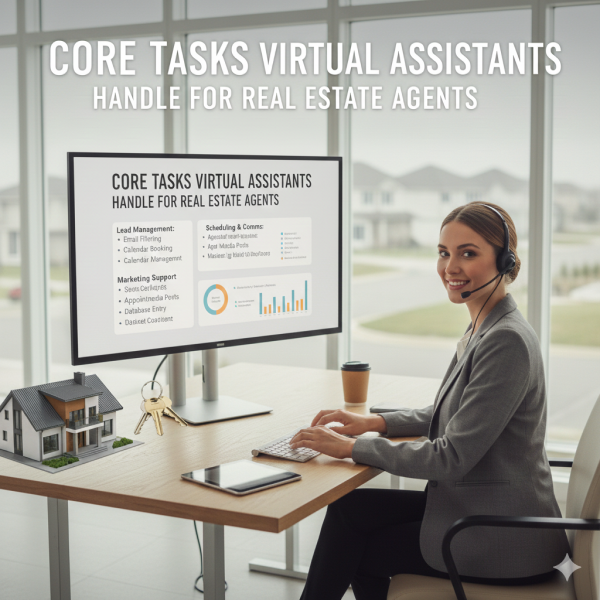
Your virtual assistant becomes your secret weapon. Here’s what they do:
Administrative Support and Data Entry
VAs manage your calendar, respond to emails, and keep client records updated. They input property details into your CRM, ensuring nothing falls through the cracks. They keep records accurate and up to date, ensuring client information, property details, and transaction records are easily accessible.
Lead Generation and Follow-Up
Finding new clients takes time. Your VA can research potential leads, send follow-up emails, and schedule appointments with interested buyers or sellers. They make sure no opportunity gets missed.
Listing Management and Marketing
Virtual assistants keep property listings current and compelling across multiple platforms. They write descriptions, upload photos, post on social media, and create marketing materials that attract buyers.
Transaction Coordination
Closing deals involves lots of paperwork. VAs track deadlines, communicate with all parties, manage documents, and ensure everything moves forward smoothly until closing day.
Social Media and Digital Marketing
Your online presence matters. VAs create posts, respond to comments, run ad campaigns, and engage with your audience on Facebook, Instagram, and LinkedIn.
Biggest Challenges Real Estate Agents Face Today

The real estate market changes fast. Understanding current problems helps you see why virtual assistants are so valuable.
Limited Inventory and Housing Affordability
Housing affordability remains one of the top issues facing the real estate industry. With fewer homes available and high prices, agents need to work harder for each sale. A VA helps you maximize every opportunity by handling follow-ups and keeping your pipeline full.
Time Management and Burnout
The demands in the real estate industry can be very overwhelming, causing burnout for many realtors. You’re expected to be available nights and weekends. Virtual assistants take routine tasks off your plate so you can focus on income-producing activities and maintain work-life balance.
Technology Adoption Challenges
Agent adoption of brokerage-provided technology ranks as one of the top three business challenges. Learning new software takes time you don’t have. Many VAs come trained in real estate technology and can manage your systems efficiently.
Recruiting and Competition
Recruiting new agents ranked as the number one business challenge, with 65% citing it as a top concern. The market is crowded. Standing out requires consistent marketing and excellent client service. VAs help you deliver both without adding staff overhead.
Commission Lawsuits and Changing Regulations
Recent changes in commission structures have created uncertainty. The National Association of Realtors settlement has sent shockwaves across the real estate industry. With new rules affecting how you get paid, efficiency matters more than ever.
Economic Uncertainty
With the unforeseen status of the economy, realtors find it difficult to generate leads and close deals. Interest rates, inflation, and market volatility all affect your business. A cost-effective VA helps you stay profitable during tough times.
Why Choose https://silkeesolutions.com/ for Your Virtual Assistant Needs
When you need reliable virtual assistant services for real estate agents in USA, selecting the right partner matters. https://silkeesolutions.com/ offers specialized support designed specifically for real estate professionals.
Their team understands the unique demands of the US real estate market. From MLS management to client communication, their virtual assistants come trained and ready to contribute from day one.
What makes https://silkeesolutions.com/ different:
Industry Expertise: Their VAs know real estate terminology, processes, and best practices. You don’t waste time training someone who doesn’t understand your business.
Flexible Solutions: Whether you need part-time help or full-time support, they customize services to match your exact requirements and budget.
Quality Assurance: All assistants undergo thorough screening and training. You get professionals who deliver consistent, high-quality work.
US Market Focus: Understanding American real estate regulations and customer expectations means better results for your business.
What Skills to Look for in a Real Estate Virtual Assistant

Not all virtual assistants are equal. Real estate virtual assistants possess specific knowledge and skills tailored to real estate businesses. Here’s what matters:
Technical Proficiency
Your VA should know popular real estate software. This includes CRM platforms like Salesforce or Follow Up Boss, MLS systems, transaction management tools, and email marketing software.
Communication Skills
Clear, professional communication builds trust. Look for VAs who write well, respond promptly, and handle client interactions with care.
Marketing Knowledge
VAs are skilled in creating compelling marketing materials such as flyers, brochures, and online listings that showcase properties effectively. Social media management and basic graphic design skills add value.
Organization and Attention to Detail
Real estate involves deadlines and legal requirements. Your VA must stay organized, catch errors, and manage multiple tasks without missing important details.
Proactive Problem-Solving
The best VAs don’t just follow instructions. They identify issues before they become problems and suggest improvements to your processes.
How to Get Started with a Real Estate Virtual Assistant
Starting is easier than you think. Follow these steps:
Step 1: Identify Your Needs
Make a list of tasks taking up your time. What do you hate doing? What keeps you from revenue-generating activities? These are perfect for delegation.
Step 2: Set a Budget
Decide how much you can invest monthly. Remember that saving 5-10 hours weekly on administrative work means more time for showings and negotiations.
Step 3: Choose Your Hiring Model
Will you hire directly, use a freelance platform, or work with a specialized company like https://silkeesolutions.com/? Each option has trade-offs in cost, quality, and management time.
Step 4: Start Small and Scale
Begin with part-time help handling one or two task categories. As you build trust and see results, expand their responsibilities.
Step 5: Provide Clear Instructions
Create standard operating procedures for repeated tasks. Record video tutorials showing exactly how you want things done. Clear expectations lead to better outcomes.
Step 6: Use Project Management Tools
Apps like Asana, Trello, or Monday.com help you assign tasks, track progress, and communicate efficiently with your VA.
Different Types of Real Estate Virtual Assistant Services
Understanding your options helps you choose the right fit:
General Administrative VAs
These assistants handle email management, scheduling, data entry, and basic client communication. They’re affordable and work well for agents who need organizational support.
Transaction Coordinators
Specialized VAs manage everything from contract to closing. They track deadlines, communicate with all parties, organize documents, and ensure smooth transactions.
Marketing Specialists
These VAs focus on promoting your brand. They create content, manage social media, run advertising campaigns, and optimize your online presence.
Lead Generation Experts
Finding potential clients is their specialty. They research prospects, make initial contact, qualify leads, and set appointments for you.
Inside Sales Agents (ISAs)
More advanced than general VAs, ISAs handle phone calls with prospects, answer questions about properties, and work to convert leads into clients.
Real-World Benefits of Hiring a Virtual Assistant

The advantages go beyond just saving money:
More Time for High-Value Activities: When someone else handles administrative work, you focus on meeting clients, showing properties, and negotiating deals.
Better Client Service: VAs manage correspondence with clients and prospects, providing timely and clear responses that build strong relationships and foster trust. Quick responses and organized communication improve client satisfaction.
Business Scalability: Add VAs as your business grows without the complexity of hiring local employees. Scale up during busy seasons and down when things slow.
Work-Life Balance: Stop working every evening and weekend. Delegate tasks so you can enjoy personal time without worrying about missed opportunities.
Competitive Advantage: While competitors struggle with administrative overload, you stay focused on activities that generate income.
Reduced Overhead: No need to rent office space, buy equipment, or provide benefits. VAs work remotely with their own resources.
Common Mistakes to Avoid When Hiring VAs
Learn from others’ experiences:
Poor Communication: Don’t assume your VA knows what you want. Provide detailed instructions and give feedback regularly.
No Training Period: Even experienced VAs need time to learn your specific processes and preferences. Budget time for onboarding.
Micromanaging: Hiring a VA means trusting them to handle tasks. Constant checking wastes the time you’re trying to save.
Unclear Expectations: Set measurable goals and deadlines. Vague assignments lead to disappointing results.
Choosing Price Over Quality: The cheapest option often costs more in mistakes and management time. Balance affordability with competence.
Not Using Proper Tools: Invest in project management software and communication platforms that make remote work efficient.
The Future of Virtual Assistants in Real Estate
The trend toward remote support continues growing. The real estate virtual assistant service market has experienced significant growth, fueled by demand for remote work solutions.
Artificial intelligence is changing the game. AI tools can integrate with calendars to identify scheduling conflicts and suggest optimal times for appointments. Smart VAs who combine human judgment with AI tools will deliver even better results.
More agents are realizing they can’t compete without help. As the industry becomes more competitive, having a skilled virtual team becomes essential rather than optional.
Making the Investment Work for You
Think of your VA as a business partner, not an expense. Track the hours they save you and calculate what those hours are worth in potential commissions.
If your time is worth $100 per hour and a VA saves you 10 hours weekly, that’s $1,000 in value for maybe $200-400 in cost. The return on investment is clear.
Start measuring results after the first month. Are you closing more deals? Do you feel less stressed? Is your client communication improving? These indicators show whether your VA arrangement is working.
Conclusion: Take Action Today
Virtual assistant services for real estate agents in USA provide the support you need to grow without adding expensive overhead. From administrative tasks to marketing and transaction coordination, VAs handle the work that drains your time and energy.
The challenges facing real estate agents today require smart solutions. Limited inventory, market uncertainty, and changing regulations make efficiency critical. A skilled virtual assistant helps you do more with less while maintaining high service standards.
Whether you’re a solo agent looking to scale or an established professional wanting better work-life balance, virtual assistants offer a proven solution. The investment pays for itself quickly through increased productivity and deal flow.
Ready to transform your real estate business? Visit https://silkeesolutions.com/ to explore how professional virtual assistant services can help you achieve your goals. Don’t let administrative work hold you back from reaching your full potential.