
Virtual Sales Assistant Responsibilities
In today’s digital-first business landscape, virtual sales assistants (VSAs) have become indispensable assets for companies looking to scale their sales operations without the overhead of traditional hiring. These remote professionals blend sales expertise with technological proficiency to drive revenue growth from anywhere in the world.
Whether you’re considering hiring a VSA or becoming one yourself, understanding the full scope of responsibilities and required skills is crucial for success. This comprehensive guide breaks down everything you need to know about virtual sales assistant roles.
Core Responsibilities of a Virtual Sales Assistant
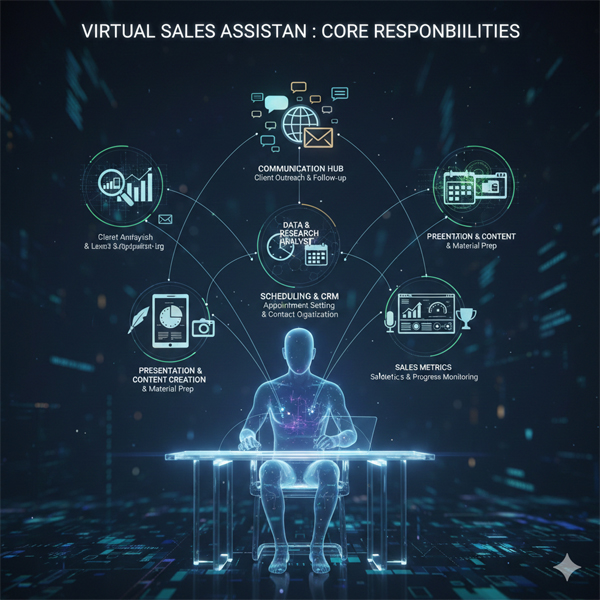
Virtual sales assistants wear many hats throughout the sales cycle. Their responsibilities typically include:
Lead Generation and Prospecting
At the foundation of every successful sales operation is a steady stream of qualified leads. VSAs conduct extensive research to identify potential customers who match the ideal client profile. They utilize databases, social media platforms, and industry directories to build targeted prospect lists. This involves analyzing company sizes, industries, decision-maker roles, and buying signals to ensure sales teams focus their efforts on the most promising opportunities.
Customer Relationship Management
Maintaining accurate and up-to-date customer information is critical for effective sales operations. VSAs manage CRM systems by entering new contacts, updating existing records, tracking interaction history, and ensuring data quality across the platform. They create detailed notes from sales calls, schedule follow-up activities, and maintain a complete record of the customer journey from first contact through closed deals.
Outreach and Communication
VSAs serve as the first point of contact for many potential customers. They craft and send personalized email sequences, make initial qualification calls, respond to inbound inquiries, and schedule appointments for sales representatives. Their communication skills set the tone for the entire customer relationship, making this responsibility particularly crucial.
Sales Support and Administration
Behind every successful sale is meticulous administrative work. Virtual sales assistants prepare sales presentations, create proposals and quotes, process orders and contracts, and generate regular sales reports. They handle the administrative burden that would otherwise consume valuable time from closing-focused sales professionals.
Research and Market Intelligence
Staying informed about market trends, competitor activities, and industry developments is essential for sales success. VSAs conduct competitor analysis, research prospect companies before outreach, identify industry trends that create sales opportunities, and gather insights that inform sales strategies.
Follow-up and Nurturing
Not every prospect is ready to buy immediately. VSAs maintain engagement with leads through the sales pipeline by sending follow-up emails, sharing relevant content and resources, re-engaging cold leads, and ensuring no opportunity falls through the cracks due to lack of follow-through.
Soft Skills vs Hard Skills: What Makes a Great VSA

The most effective virtual sales assistants combine interpersonal abilities with technical expertise. Both skill categories are essential for success.
Essential Soft Skills
Communication Excellence: VSAs must articulate value propositions clearly, actively listen to prospect needs, write persuasively across emails and proposals, and adapt their communication style to different audiences. The ability to convey complex information simply and build rapport remotely is fundamental.
Time Management and Organization: Working remotely requires exceptional self-discipline. Successful VSAs prioritize tasks effectively, manage multiple prospects simultaneously, meet deadlines consistently without direct supervision, and maintain detailed organization systems that prevent anything from slipping through the cracks.
Adaptability and Problem-Solving: Sales environments change rapidly. Top VSAs think critically to overcome objections, adapt to new tools and processes quickly, remain resilient when facing rejection, and find creative solutions to unique challenges that arise during the sales process.
Attention to Detail: Small mistakes can derail deals. VSAs must ensure accuracy in data entry and reporting, catch errors before they reach prospects or clients, maintain consistency across communications, and follow established processes precisely.
Self-Motivation and Initiative: Without a manager looking over their shoulder, VSAs must stay productive independently, proactively seek ways to improve processes, take ownership of their results, and maintain enthusiasm even during slow periods.
Critical Hard Skills
CRM Proficiency: Expertise with platforms like Salesforce, HubSpot, Pipedrive, or Zoho CRM is non-negotiable. VSAs should navigate these systems efficiently, customize fields and workflows, generate meaningful reports, and integrate CRM with other tools.
Sales Technology Stack: Beyond CRM, modern VSAs work with email automation platforms like Mailchimp or ActiveCampaign, calendar scheduling tools such as Calendly, communication platforms including Slack and Zoom, and lead generation tools like LinkedIn Sales Navigator.
Data Analysis: Understanding sales metrics enables VSAs to track conversion rates, identify trends and patterns, measure campaign effectiveness, and provide actionable insights that inform strategy adjustments.
Digital Communication Tools: Remote work requires comfort with video conferencing platforms, project management software like Asana or Trello, cloud storage solutions such as Google Drive or Dropbox, and collaborative document editing tools.
Basic Sales Methodology: Familiarity with common frameworks like BANT qualification, consultative selling approaches, objection handling techniques, and the sales funnel concept ensures VSAs can support sophisticated sales processes.
Tools Every VSA Should Know

The modern virtual sales assistant’s toolkit includes both specialized sales software and general productivity applications.
Customer Relationship Management Systems
CRM platforms form the backbone of sales operations. Salesforce remains the enterprise standard with comprehensive features and customization options. HubSpot offers an excellent free tier perfect for small businesses and startups. Pipedrive provides visual pipeline management with an intuitive interface, while Zoho CRM delivers affordable functionality for growing teams.
Communication and Outreach Tools
Email platforms like Gmail and Outlook are fundamental, but VSAs should also master email tracking tools such as Yesware or Mailtrack, sequence automation through platforms like Outreach.io or SalesLoft, and LinkedIn for professional networking and social selling.
Scheduling and Calendar Management
Calendly eliminates back-and-forth scheduling emails, while Acuity Scheduling offers more advanced features for complex appointment types. Google Calendar integration ensures seamless coordination across teams and time zones.
Lead Generation and Research
LinkedIn Sales Navigator unlocks advanced search filters and lead recommendations. Hunter.io helps find email addresses for outreach. ZoomInfo provides comprehensive B2B contact databases, and Clearbit enriches existing contact data with additional company information.
Productivity and Collaboration
Slack facilitates team communication and quick updates. Asana and Trello organize tasks and projects visually. Google Workspace or Microsoft 365 provides essential document creation and collaboration capabilities. Loom enables quick video messages for more personal communication.
Analytics and Reporting
Google Analytics tracks website visitor behavior and conversion sources. Dashboarding tools like Databox or Klipfolio visualize key metrics. Native CRM reporting features provide insights into pipeline health and team performance.
Performance KPIs: Measuring VSA Success
Effective virtual sales assistants track specific metrics that demonstrate their contribution to revenue generation.
Activity-Based Metrics
These measure the volume of work completed: number of leads generated per week, outbound emails sent daily, phone calls or discovery meetings scheduled, CRM records created or updated, and proposals or quotes prepared. While activity doesn’t guarantee results, consistent high-volume work creates more opportunities.
Quality and Conversion Metrics
These assess the effectiveness of VSA efforts: lead-to-opportunity conversion rate, email response and open rates, appointment show-up rate, accuracy of data entry and record maintenance, and lead quality scores based on eventual outcomes.
Revenue Impact Metrics
Ultimately, VSAs contribute to the bottom line. Key revenue metrics include pipeline value influenced or generated, percentage of deals that involve VSA touchpoints, average deal size for VSA-qualified leads, and sales cycle length for VSA-supported opportunities compared to others.
Efficiency Metrics
These demonstrate productivity and resource optimization: time from lead capture to first contact, average time to complete specific tasks, cost per lead generated, and ratio of qualified leads to total leads contacted.
Customer Satisfaction Indicators
Quality relationships matter as much as quantity. VSAs should track prospect feedback scores, response times to inquiries, customer retention for accounts they support, and internal stakeholder satisfaction from the sales team.
Most successful VSAs aim for benchmarks like 50-100 new qualified leads per week, 20-30% email response rates, 70%+ appointment show rates, and significant contributions to monthly pipeline generation goals.
Best Practices for VSA Excellence
Continuous improvement separates good virtual sales assistants from great ones. Establish clear daily and weekly routines that ensure consistent output. Block time for specific activities like prospecting, follow-up, and administrative work. Use templates and automation for repetitive tasks, but always personalize before sending. Stay updated on industry trends and your company’s products or services. Regularly review performance metrics and identify improvement opportunities.
Communication with your sales team is paramount. Provide regular updates on pipeline health and lead quality. Ask for feedback on the leads you’re generating. Align on qualification criteria and ideal customer profiles. Share insights from prospect conversations that could inform broader strategy.
Invest in ongoing learning through sales methodology courses, CRM certification programs, webinars on sales technology tools, and industry-specific knowledge development. The most valuable VSAs combine sales skills with deep understanding of the industries they serve.
Ready to Leverage Virtual Sales Support?
Virtual sales assistants represent a strategic advantage for businesses looking to scale efficiently. By handling time-consuming prospecting, qualification, and administrative tasks, VSAs free senior sales professionals to focus on what they do best: building relationships and closing deals.
Whether you need support with lead generation, CRM management, appointment setting, or comprehensive sales operations, a dedicated virtual sales assistant can transform your sales productivity and drive consistent revenue growth.
For businesses seeking experienced, professionally trained virtual sales assistants who understand modern sales processes and technology, Silkee Solutions provides top-tier virtual staffing services tailored to your specific sales needs. Their carefully vetted VSAs bring the skills, tools knowledge, and work ethic necessary to become immediate contributors to your sales success.
Frequently Asked Questions
What is the difference between a virtual sales assistant and a traditional sales representative?
A virtual sales assistant primarily focuses on sales support activities like lead generation, CRM management, appointment setting, and administrative tasks, working remotely to enable sales representatives to focus on closing deals. Traditional sales representatives typically handle the entire sales process from prospecting through closing and maintain direct responsibility for revenue targets. VSAs support multiple sales reps and optimize the earlier stages of the sales funnel.
How much does it cost to hire a virtual sales assistant?
Virtual sales assistant costs vary based on experience, location, and scope of responsibilities. Entry-level VSAs may charge $15-25 per hour, while experienced professionals with specialized industry knowledge can command $30-50 per hour or more. Many businesses find that even at higher rates, VSAs deliver exceptional ROI by significantly increasing the productivity of their existing sales team. Full-time dedicated VSAs through agencies typically range from $2,000-4,000 monthly.
What industries benefit most from virtual sales assistants?
Nearly any industry with a B2B sales model can benefit from VSAs, but they’re particularly valuable in technology and SaaS companies, real estate, financial services, consulting firms, healthcare and medical devices, manufacturing and industrial equipment, and professional services. Any business with a longer sales cycle and defined qualification process will see significant value from VSA support.
How do I train a virtual sales assistant on my products or services?
Effective VSA onboarding includes comprehensive product documentation and training materials, recorded demos and presentations they can review, shadowing sales calls to understand real conversations, clear ideal customer profile and qualification criteria, access to your knowledge base and FAQs, regular check-ins during the first 30-60 days, and ongoing updates when products or messaging change. Most professional VSAs are quick learners who can become productive within 2-4 weeks with proper training.
Can a virtual sales assistant work across different time zones?
Yes, and this can actually be an advantage. Many businesses hire VSAs specifically to extend their sales coverage hours. A VSA in a different time zone can follow up with leads, respond to inquiries, and schedule appointments outside your core team’s working hours. Clear communication protocols, shared calendars, and asynchronous updates through CRM and project management tools make cross-timezone collaboration seamless.
What security measures should be in place when working with a VSA?
Protecting sensitive customer and business data is crucial. Implement role-based access controls in your CRM and other systems, require strong passwords and two-factor authentication, use secure communication channels for sensitive information, establish clear data handling policies and confidentiality agreements, provide VPN access if needed for system security, regularly audit access logs and permissions, and work with reputable VSA providers who conduct background checks and have established security protocols.
How do I measure the ROI of hiring a virtual sales assistant?
Track metrics including the number of qualified leads generated, appointments scheduled that convert to opportunities, pipeline value influenced by VSA activities, time saved by sales representatives on administrative tasks, cost per lead compared to other channels, and revenue generated from VSA-sourced opportunities. Most businesses find that a VSA who generates even 10-20 qualified opportunities monthly delivers significant positive ROI by enabling sales reps to close more deals rather than spending time on prospecting and admin work.