
Introduction
A virtual assistant (VA) is a remote professional who provides administrative, technical, or creative support to businesses and entrepreneurs from a remote location. Unlike traditional office assistants, virtual assistants work from home or their own offices and communicate with clients through email, phone calls, video conferences, and project management tools.
In today’s digital world, more businesses are turning to virtual assistant services to save money, increase productivity, and focus on core business activities. This guide will help you understand what virtual assistants do, how they work, and whether hiring one is right for you.
What Does a Virtual Assistant Do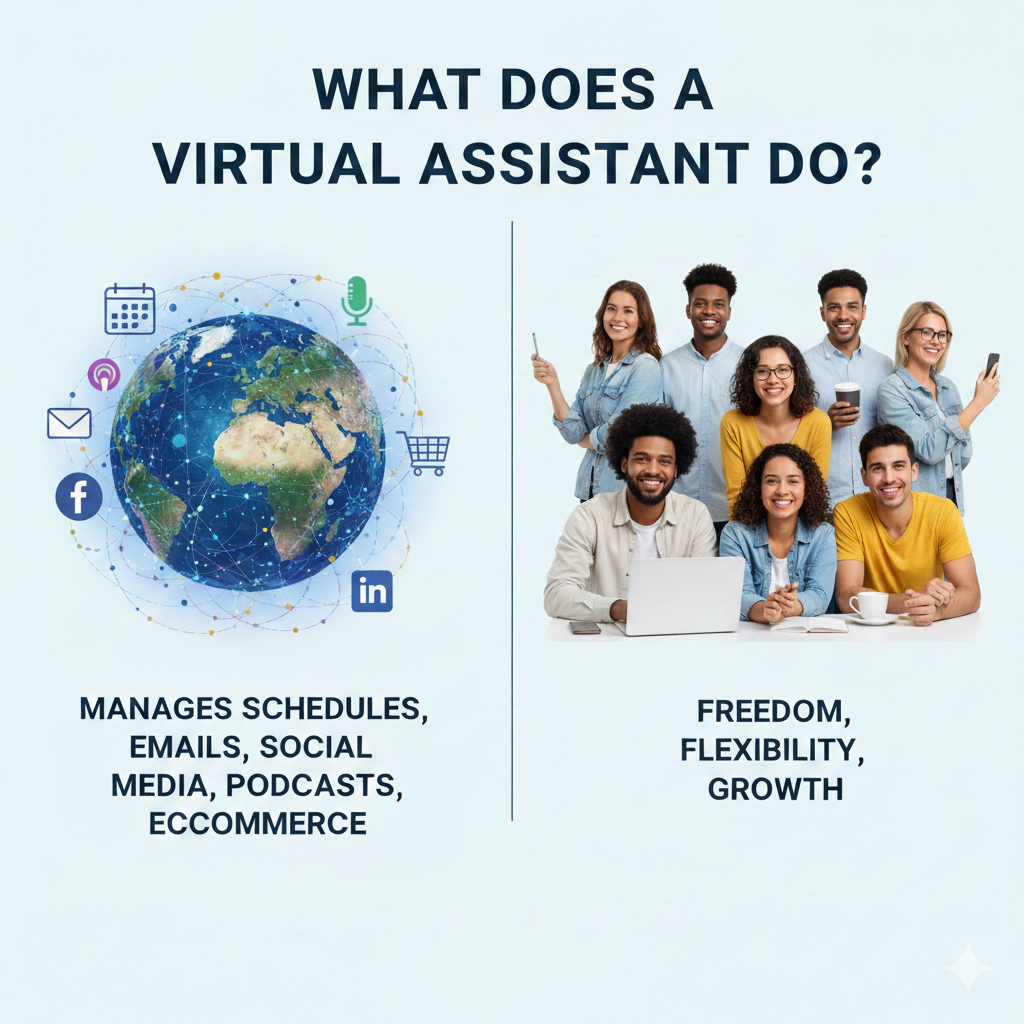
Virtual assistants handle a wide range of tasks that would normally require an in-house employee. The specific duties depend on the client’s needs and the VA’s skills.
Common Virtual Assistant Tasks
Administrative Support: Virtual administrative assistants manage daily office tasks like answering emails, scheduling appointments, organizing files, and handling phone calls. They keep your business running smoothly without being physically present in your office.
Email Management: A virtual assistant can sort through your inbox, respond to routine messages, flag important emails, and keep your communication organized. This saves you hours each week.
Calendar Management: Virtual assistants schedule meetings, send reminders, coordinate with team members, and manage your daily calendar so you never miss important appointments.
Data Entry: Many businesses hire virtual assistants for data entry tasks like updating spreadsheets, maintaining databases, entering customer information, and organizing digital files.
Social Media Management: Social media virtual assistants create posts, respond to comments, schedule content, and help grow your online presence across platforms like Facebook, Instagram, and LinkedIn.
Customer Service: Virtual assistants can handle customer inquiries, process orders, manage support tickets, and ensure your customers receive timely responses.
Bookkeeping and Invoicing: Some virtual assistants specialize in basic bookkeeping tasks like tracking expenses, creating invoices, processing payments, and maintaining financial records.
Types of Virtual Assistants
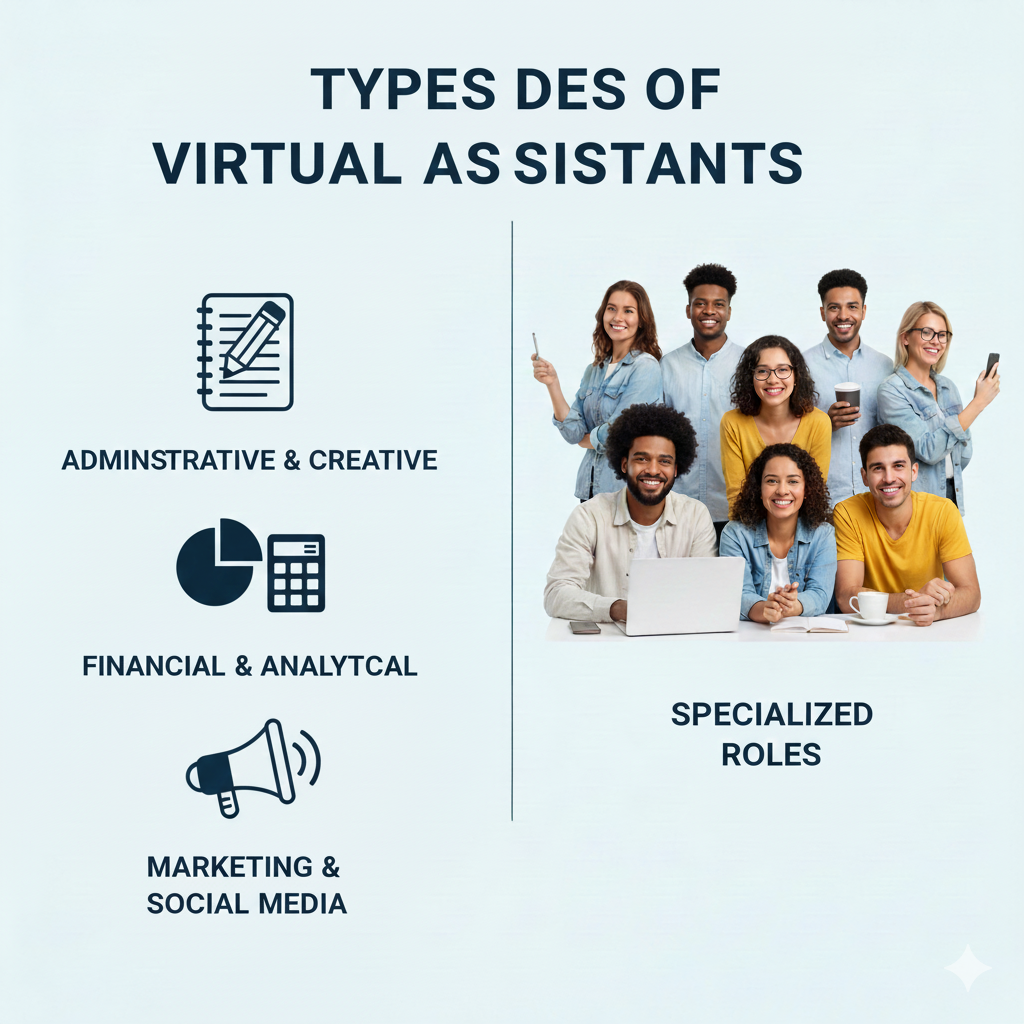
General Virtual Assistant
A general VA handles various administrative tasks and is perfect for small business owners who need help with daily operations.
Executive Virtual Assistant
Executive virtual assistants provide high-level support to CEOs and business leaders, managing complex schedules, coordinating travel, and handling confidential information.
Specialized Virtual Assistants
These VAs have expertise in specific areas:
- Real estate virtual assistants help with property listings and client communications
- E-commerce virtual assistants manage online stores and product listings
- Medical virtual assistants handle healthcare-related administrative work
- Legal virtual assistants support law firms with documentation and client management
Benefits of Hiring a Virtual Assistant

Cost Savings
Hiring a virtual assistant is more affordable than employing a full-time staff member. You don’t pay for office space, equipment, benefits, or paid time off. You only pay for the hours worked or tasks completed.
Increased Productivity
When you delegate routine tasks to a virtual assistant, you free up time to focus on growing your business, meeting with clients, and handling high-priority projects.
Flexibility
Virtual assistant services are flexible. You can hire a VA for just a few hours per week or full-time support. You can scale up or down based on your business needs.
Access to Skilled Professionals
Virtual assistants often have specialized skills and experience in various industries. You can find professionals with exactly the expertise you need.
Work-Life Balance
By outsourcing time-consuming tasks, business owners and entrepreneurs can achieve better work-life balance and reduce stress.
How Much Does a Virtual Assistant Cost?
Virtual assistant costs vary based on experience, skills, and location. Here’s what you can expect:
- Entry-level VAs: $10-$20 per hour for basic administrative tasks
- Experienced VAs: $25-$50 per hour for specialized skills
- Expert VAs: $50-$100+ per hour for high-level executive support
Some virtual assistants charge monthly packages instead of hourly rates. A virtual assistant agency might charge higher rates but provides backup support and quality assurance.
How to Hire a Virtual Assistant
Step 1: Identify Your Needs
Make a list of tasks you want to delegate. Be specific about the skills and experience required. This helps you find the right virtual assistant for your business.
Step 2: Set Your Budget
Decide how many hours of support you need and what you can afford to spend. Remember that a good virtual assistant can save you money by increasing efficiency.
Step 3: Find Candidates
You can find virtual assistants through:
- Freelance platforms like Upwork and Fiverr
- Virtual assistant companies and agencies
- Professional networking sites like LinkedIn
- Referrals from other business owners
Step 4: Interview and Test
Interview potential candidates to assess their skills, communication style, and reliability. Consider giving a small paid test project before committing to a long-term arrangement.
Step 5: Provide Clear Instructions
Once you hire a virtual assistant, provide detailed instructions, access to necessary tools, and regular feedback to ensure success.
Tools Virtual Assistants Use
Virtual assistants rely on various online tools to complete their work:
- Communication: Zoom, Skype, Slack, Microsoft Teams
- Project Management: Asana, Trello, Monday.com
- File Sharing: Google Drive, Dropbox, OneDrive
- Time Tracking: Toggl, Harvest, Time Doctor
- Scheduling: Calendly, Acuity Scheduling
- Social Media: Hootsuite, Buffer, Later
Who Needs a Virtual Assistant?

Small Business Owners
Small businesses benefit greatly from virtual assistant services because they get professional support without the overhead of full-time employees.
Entrepreneurs and Solopreneurs
Solo entrepreneurs often wear many hats. A virtual assistant helps them delegate tasks and focus on revenue-generating activities.
Busy Executives
Executives use virtual assistants to manage their schedules, handle correspondence, and coordinate projects.
Real Estate Agents
Real estate professionals hire virtual assistants to manage listings, schedule showings, and follow up with leads.
E-commerce Store Owners
Online store owners use virtual assistants to process orders, update product listings, and handle customer service.
Virtual Assistant vs. In-House Employee
Virtual Assistant Advantages:
- Lower cost (no benefits, office space, or equipment)
- Flexibility to scale up or down
- Access to diverse skill sets
- No long-term commitment required
In-House Employee Advantages:
- Physical presence in the office
- Easier supervision and training
- Better integration with company culture
- More control over work schedule
The best choice depends on your business needs, budget, and work style.
How Virtual Assistants Work Remotely
Virtual assistants work from their own locations using internet-connected devices. They communicate with clients through email, messaging apps, and video calls. Most virtual assistants work during their clients’ business hours, though some offer 24/7 support or work in different time zones.
Remote work technology makes it easy for virtual assistants to access files, collaborate on projects, and stay connected with their clients regardless of location.
Common Concerns About Hiring a Virtual Assistant
Will they understand my business?
Good virtual assistants take time to learn about your business, processes, and goals. Clear communication and proper onboarding help virtual assistants become valuable team members.
How do I ensure quality work?
Start with small projects, provide detailed instructions, set clear expectations, and use project management tools to track progress. Regular check-ins help maintain quality standards.
Is my data safe?
Professional virtual assistants understand the importance of confidentiality. Use secure file-sharing tools, require non-disclosure agreements, and only share necessary information.
What if it doesn’t work out?
Most virtual assistant arrangements are flexible. If someone isn’t a good fit, you can end the relationship and find a better match without the complications of terminating an employee.
Getting Started with Virtual Assistant Services
If you’re ready to hire a virtual assistant, start by making a list of tasks that take up too much of your time. Calculate how many hours per week you need support. Research virtual assistant companies or freelance platforms to find qualified candidates.
Remember that finding the right virtual assistant might take time, but the investment pays off through increased productivity and business growth.
Conclusion
A virtual assistant is a remote professional who provides valuable support to businesses and entrepreneurs. From administrative tasks to specialized services, virtual assistants help you save time, reduce costs, and focus on what matters most in your business.
Whether you need a few hours of help each week or full-time virtual support, there’s a virtual assistant service that fits your needs and budget. By understanding what virtual assistants do and how to hire them effectively, you can make an informed decision about adding this valuable resource to your business.
The key to success with virtual assistant services is clear communication, realistic expectations, and choosing someone whose skills match your needs. Start small, build trust, and watch your productivity soar as you delegate tasks to a capable virtual assistant.