
Short answer: Annuity administration outsourcing means delegating the non-licensed paperwork behind annuity sales and servicing — suitability documentation, contract processing, and ongoing policy administration — to a trained virtual assistant, while the licensed producer retains every recommendation and advisory decision. It typically costs $700–$1,500/month as part of a broader insurance VA package rather than as a standalone service, and it directly supports NAIC Model #275 compliance by keeping the required written documentation organized and complete.
Annuity sales come with a documentation burden most other insurance products don’t. Since the NAIC’s 2020 update to the Suitability in Annuity Transactions Model Regulation (#275), producers recommending an annuity must satisfy four specific obligations — care, disclosure, avoiding conflicts of interest, and written documentation — for every single recommendation. Forty states have adopted this “best interest” standard. That’s a lot of paperwork attached to every sale, and it’s exactly the kind of structured, repeatable work that benefits from dedicated support.
Why annuity administration is genuinely more paperwork-heavy
Under NAIC Model #275, a producer must know the consumer’s financial situation, understand the available options, have a reasonable basis for believing the recommendation fits the consumer’s needs, and document all of it in writing before the sale closes. Most states also require a four-hour annuity-specific training course before a producer can sell them at all. None of this documentation work requires a license to prepare — it requires the producer’s judgment to finalize and sign off on, but the gathering, organizing, and formatting can be delegated entirely.
Beyond the point of sale, annuities also carry more ongoing administrative touchpoints than a typical P&C policy — annual statements, beneficiary reviews, surrender charge schedules that change over time, and required minimum distribution tracking for qualified annuities. An agency writing a meaningful volume of annuity business accumulates real administrative load that has nothing to do with selling and everything to do with keeping records straight.
What annuity administration outsourcing actually covers
Suitability documentation preparation
Your VA gathers and organizes the consumer financial information required under Model #275 — age, income, timeline, risk tolerance, financial goals — into the documentation format your agency uses, ready for the producer’s review and final recommendation. The VA prepares the paperwork; the producer makes and signs off on the actual recommendation.
Contract processing and carrier submission
Once a recommendation is finalized, your VA handles the application paperwork, submits it to the carrier, and tracks the contract through issue — following up on any outstanding requirements along the way.
Ongoing policy administration
Annual statement review, beneficiary designation tracking, and surrender charge schedule monitoring are ongoing tasks that don’t require a license but do require someone paying consistent attention. Your VA owns this so nothing lapses quietly between annual reviews.
Required minimum distribution (RMD) tracking
For qualified annuities subject to RMD rules, your VA tracks distribution deadlines and flags upcoming requirements well ahead of time, reducing the risk of a client missing a deadline that carries real tax consequences.
Record retention and audit readiness
Since every recommendation requires written documentation under Model #275, your VA maintains organized, retrievable records — useful in the ordinary course of business, and essential if your agency is ever subject to a compliance review. Agents who also write Medicare business face a related but distinct documentation regime — see our guide to Medicare insurance virtual assistant support for how CMS’s Scope of Appointment rules differ from annuity suitability requirements.
What stays with the licensed producer
Annuity recommendations sit squarely in regulated territory, and the boundary here is firm. A VA never makes or characterizes a recommendation, never determines suitability, and never has a client conversation that could be construed as advice. The four core obligations under Model #275 — care, disclosure, conflict avoidance, and the final documented recommendation — belong entirely to the licensed producer. The VA’s role is preparing the paperwork that supports that judgment, not exercising it.
This isn’t legal or compliance advice. Suitability requirements vary by state and by annuity type, and if you have specific questions about your obligations under Model #275 or your state’s adopted version of it, we’d recommend confirming directly with your compliance resource or state insurance department.
How Silkee supports annuity-writing agencies
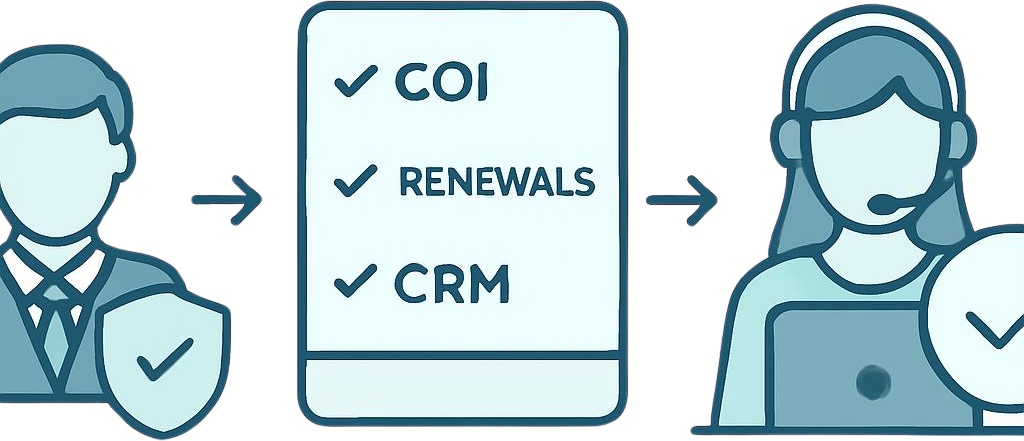
Annuity administration support is included as part of our Insurance Concierge package rather than sold as a separate service — most agencies writing annuities also need standard policy servicing, renewal coordination, and CRM management, and it’s more efficient to have one dedicated VA handle all of it than to split the work across providers.
Book a free consultation to talk through your agency’s annuity volume and documentation workflow, or see how our insurance virtual assistant cost compares to hiring in-house before you reach out.
Frequently asked questions
What is NAIC Model #275 and how does it affect annuity paperwork?
Model #275, the Suitability in Annuity Transactions Model Regulation, requires producers to satisfy four obligations before recommending an annuity: care, disclosure, avoiding conflicts of interest, and written documentation of the recommendation. Forty states have adopted the 2020 “best interest” update. Every annuity sale generates a documentation requirement that a VA can help prepare, though the final recommendation must come from the licensed producer.
Can a virtual assistant determine if an annuity is suitable for a client?
No. Suitability determination is a licensed producer’s responsibility and cannot be delegated. A VA can gather and organize the financial information the suitability review requires, but the actual determination and recommendation must come from the producer.
What is required minimum distribution tracking and why does it matter?
Qualified annuities are subject to IRS required minimum distribution rules once the owner reaches a certain age. Missing an RMD deadline can carry real tax penalties for the client, which is why proactive tracking — flagging upcoming deadlines well in advance — is one of the more valuable ongoing administrative tasks a VA can own.
Is annuity administration outsourcing a separate service from general insurance VA support?
At Silkee, no — it’s included within our Insurance Concierge package rather than sold separately. Most agencies writing annuities also need standard policy servicing and renewal support, so one dedicated VA handling both is more efficient than splitting the work across two providers.