
This is the question almost every agency owner asks before bringing on a virtual assistant, even if they don’t say it out loud: am I going to get in trouble for this? It’s a fair question, and it deserves a direct answer rather than a sales pitch that glosses over it.
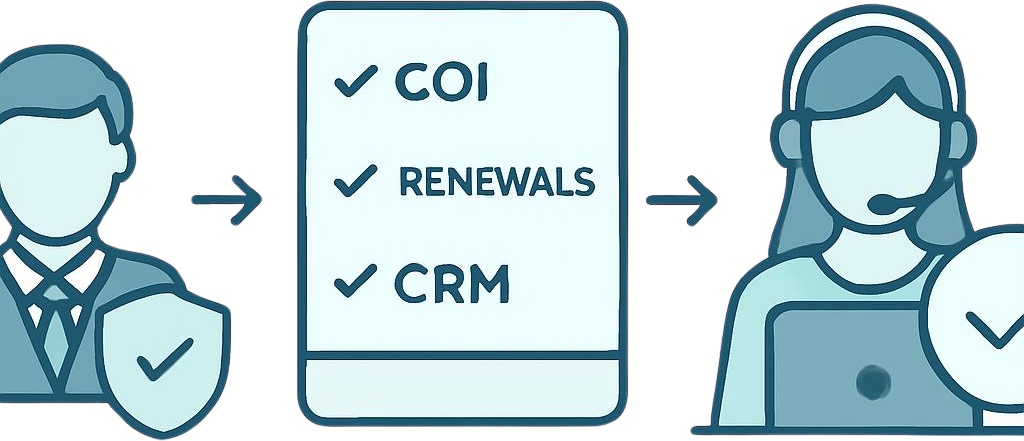
The short answer: no, unless licensed
An unlicensed virtual assistant cannot sell insurance. That means no soliciting new business, no binding coverage, and no advising a client on what they should buy. Insurance licensing requirements exist precisely to make sure the person giving coverage advice has the training to back it up — and those requirements apply regardless of whether that person is in your office or working remotely.
That said, “can’t sell insurance” covers a much narrower slice of agency work than most owners assume. Here’s exactly where that line sits.
What counts as “selling” insurance
Soliciting applications
Actively persuading a prospect to apply for a specific policy is solicitation, and it requires a license. A VA can schedule the call where that conversation happens — they can’t be the one having it.
Binding coverage
Confirming that coverage is in effect, or committing the carrier to a risk, is a licensed function. This stays with your agents, full stop.
Quoting policy terms or giving coverage advice
Telling a client what coverage they need, explaining policy terms in a way that amounts to advice, or providing a specific quote are all licensed activities. A VA can gather the information needed to generate a quote — the licensed agent delivers it.
What a VA CAN legally do
This is the list that actually matters for your day-to-day, because it’s longer than most agency owners expect:
Data entry, documentation, and AMS management
Entering policy information, maintaining records, and keeping your AMS current — none of this requires a license. It’s also where most agencies lose the most unbilled hours.
Certificate of insurance processing
Issuing certificates against an already-bound policy, tracking holder requirements, and managing renewal dates is administrative work, not a sales or advisory function.
Renewal coordination and client communication
Sending renewal questionnaires, following up on missing information, and reminding clients of upcoming deadlines is coordination, not advice — as long as the VA isn’t the one answering coverage questions that come back.
Lead intake and appointment scheduling
A VA can take down a prospect’s contact information and schedule them with a licensed agent. What they can’t do is discuss coverage options with that prospect before handing them off.
Claims intake support
Collecting initial claim information and documentation, and routing it to the right person, is intake — not adjusting. The moment a claim requires a coverage determination, it needs to go to someone licensed to make that call.
How state rules vary
The general line above holds across the country, but the specific definitions and enforcement details vary by state. If you operate in Texas, our Texas insurance VA page covers the additional considerations specific to Texas Department of Insurance rules. Writing life insurance specifically brings an additional layer — see our guide to life insurance VA compliance, covering the replacement-regulation boundaries that don’t apply to P&C. If you operate elsewhere, your state’s department of insurance is the authoritative source for what’s allowed in your jurisdiction.
How Silkee keeps your agency compliant
Every Silkee insurance VA is trained on the licensing boundary described above, and our workflows are built around it. That means:
- Clear task boundaries defined before onboarding starts
- Documented escalation protocols — any coverage question gets routed to your licensed staff, not answered by the VA
- Activity logging so there’s a clear record of what the VA did and didn’t do on any given account
Ready to get started?
We offer a free VA trial with $0 setup fee for new clients. Most agencies are live within 5–7 business days, with compliance boundaries built into onboarding from day one.
Book your free consultation or see our hiring checklist before you reach out.
Frequently asked questions
Is it legal to have an unlicensed person process certificates of insurance?
Yes. Processing certificates against an already-bound policy is administrative work and does not require an insurance license.
Can a VA quote a policy if I review it before sending?
Generally, no — quoting and providing coverage terms is considered a licensed activity in most states regardless of who reviews it afterward. The safer structure is having the VA gather the information needed for a quote, with a licensed agent generating and delivering it.
What happens if a VA accidentally gives coverage advice?
This is exactly why clear task boundaries and escalation protocols matter from day one. Our VAs are trained to route any coverage question to your licensed staff rather than answer it themselves.
Do I need a special agreement or disclosure for using a VA?
Requirements vary by state and by carrier appointment agreements. We recommend checking with your state’s department of insurance and reviewing your E&O policy to confirm what, if anything, is required for your specific situation.
Does this apply the same way in every state?
The general principles are consistent nationally, but specific rules and enforcement vary by state. Always confirm current requirements with your state’s department of insurance.
This page is for general informational purposes only and is not legal advice. Insurance licensing requirements vary by state and change over time — consult your state’s department of insurance or a licensed attorney for guidance specific to your agency.