
Agencies choose QQCatalyst for a specific reason: it delivers a modern, cloud-based agency management system at a price point that works for smaller and mid-sized independent shops. That value is real. But it comes with a trade-off most agency owners discover a few months in — the platform runs beautifully for carriers connected through IVANS download, and requires a lot of manual keying for everything else.
An insurance virtual assistant for QQCatalyst absorbs exactly that gap. Here’s what that looks like in practice.

What is QQCatalyst?
QQCatalyst is Vertafore’s cloud-based agency management system built for independent agencies. It combines client and policy records, sales pipeline tracking, marketing tools, commission reporting, and document management in a single browser-based platform, with Orange Partner APIs available for agencies that need to connect other tools.
Its appeal is straightforward: a genuinely modern interface at meaningfully lower cost than the enterprise-tier systems, which is why it tends to attract growing agencies rather than large brokerages.
The manual data entry problem QQCatalyst agencies know well
Ask agencies what they’d change about QQCatalyst and the same theme surfaces repeatedly: carrier connectivity is excellent for IVANS-enabled carriers and manual for everyone else. If your book includes regional carriers, MGAs, or specialty markets outside that download network, someone on your team is keying policy data by hand — every endorsement, every renewal, every new business item.
That work is unavoidable. It’s also entirely non-licensed, repetitive, and a poor use of a producer’s or CSR’s time. This is the single clearest case for an insurance virtual assistant for QQCatalyst: the work must be done accurately and consistently, but it does not require the person doing it to hold a license.
What an insurance virtual assistant for QQCatalyst handles
Manual policy entry for non-download carriers
Your VA keys policy data for carriers outside the IVANS network — declarations, coverage details, limits, endorsements — directly into QQCatalyst, following your agency’s naming and classification conventions so records stay consistent across the book.
Mailroom and document management
QQCatalyst’s mailroom collects incoming documents, but someone still has to route, attach, and file each one against the right client and policy. A VA works that queue daily so documents don’t pile up unattached — which is what turns a five-minute task into an afternoon of cleanup later.
Sales pipeline maintenance
The pipeline tools only help if the data reflects reality. Your VA keeps opportunity stages, follow-up dates, and notes current, so your pipeline view is something you can plan around rather than something you half-trust.
Commission reconciliation support
QQCatalyst’s commission reporting is one of its stronger features, but reconciling carrier statements against what the system expects is detailed, repetitive work. A VA runs this on a set schedule instead of it becoming a quarterly scramble.
Renewal tracking and client outreach
Your VA monitors upcoming renewals, sends client questionnaires, tracks who has responded, and packages accounts for your review well ahead of the expiry date rather than the week of.
COI issuance and holder tracking
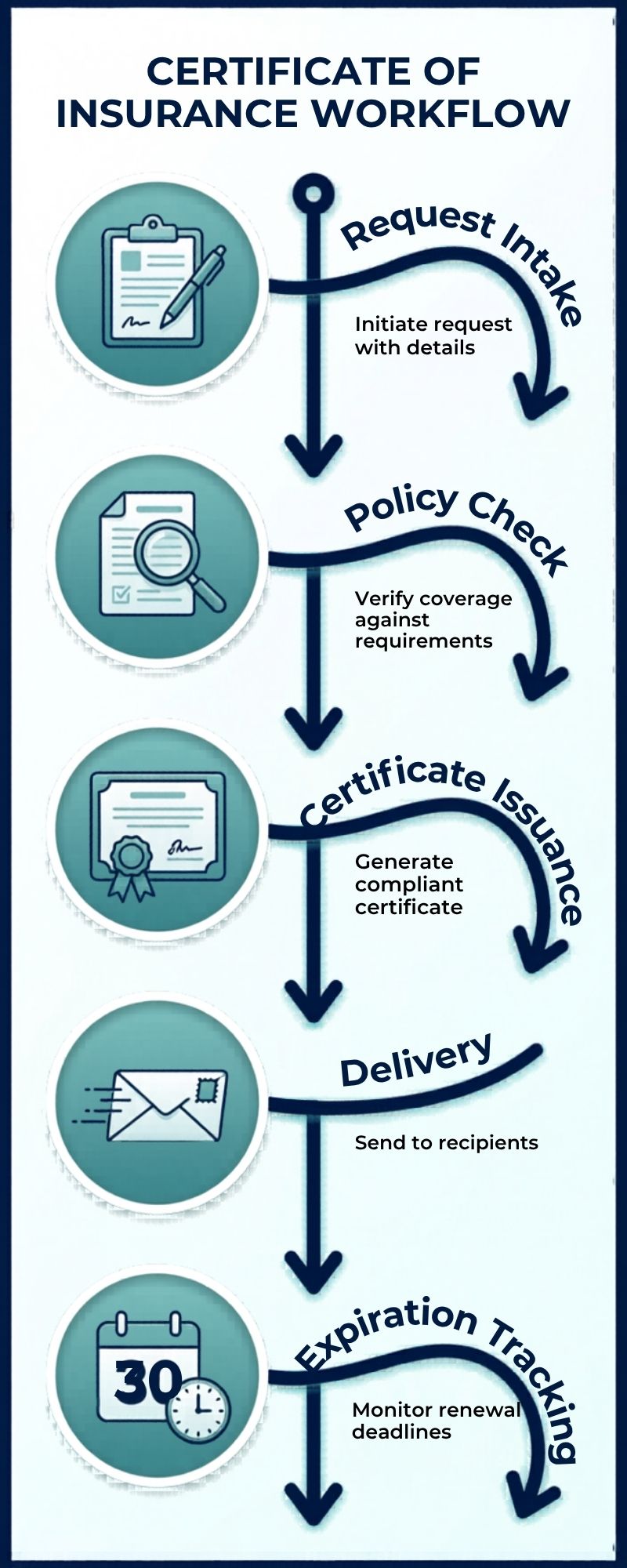
Certificate requests get processed and logged against the policy record, with holder expiration dates tracked so a lapsed certificate never becomes a client’s problem first.
Why platform experience matters here specifically
Manual data entry sounds like work anyone can do. It isn’t — not in an insurance context. A person keying policy data needs to recognise when a coverage limit looks wrong for the class of business, when a form number doesn’t match the carrier, or when a renewal has quietly changed terms. A generalist assistant enters what’s on the page. An insurance virtual assistant for QQCatalyst notices when what’s on the page doesn’t make sense.
Data entry errors in an AMS have a long tail. A misclassified policy surfaces months later during a renewal review, a remarketing exercise, or worse, a coverage dispute. Getting it right the first time is the entire value.
Onboarding into your QQCatalyst environment
We set your VA up with a dedicated, permissioned user seat inside your QQCatalyst instance — never shared credentials. That maintains a clean audit trail of who did what, and lets you adjust or revoke access whenever you need to. Encrypted connections and signed confidentiality agreements are in place before any access is granted.
Because QQCatalyst has per-agency storage considerations, we also work with you during onboarding on document naming and attachment conventions, so the mailroom workflow stays organised as volume grows.
Service packages for QQCatalyst agencies
Most agencies running QQCatalyst start with the Insurance Concierge package — policy data entry, mailroom management, renewal tracking, COI processing, and activity logging. If your priority is winning new business rather than back-office support, our Sales Assistant package may be the better fit.
Not sure which suits your agency? Book a free consultation and we’ll walk through your QQCatalyst setup together. Running a different platform? We also support AMS360, EZLynx, Applied Epic, HawkSoft, and NowCerts agencies.
Ready to get started?
We offer a free VA trial with $0 setup fee for new clients. Most agencies are live in QQCatalyst within 5–7 business days of their first call.
Book your free consultation, or see how our insurance virtual assistant cost compares to hiring in-house before you reach out.
Frequently asked questions
Can a VA handle manual policy entry for non-IVANS carriers?
Yes — this is one of the most common reasons QQCatalyst agencies bring on a VA. Carriers outside the IVANS download network require manual keying, and that work is repetitive, high-volume, and doesn’t require a licence. It’s well suited to delegation, provided the person doing it understands insurance data well enough to catch inconsistencies.
Can a VA get full access to our QQCatalyst account?
We recommend a dedicated, permissioned user seat rather than full administrative access. Your VA gets what they need to do the work while you keep a clean audit trail and full control over what they can see and edit.
How long does it take a VA to learn our QQCatalyst setup?
Because our VAs already know the platform, onboarding focuses on your carriers, naming conventions, and workflow preferences rather than the software itself. Most agencies see independent, accurate work within the first one to two weeks.
Is our client data secure with a remote VA?
Yes. Our VAs work through secure, encrypted connections, sign confidentiality agreements before onboarding, and operate inside permissioned access that you control and can revoke at any time.
What makes an insurance virtual assistant for QQCatalyst different from a general data entry service?
A general data entry service types what it sees. An insurance-trained VA recognises when a limit looks wrong for the class of business, when a form number doesn’t match the carrier, or when renewal terms have quietly changed — and flags it before the error is buried in your book.