
Life insurance carries a compliance layer that P&C simply doesn’t — the moment a client considers replacing an existing policy, specific disclosure rules kick in that don’t apply to a home or auto renewal. A virtual assistant for life insurance agents needs to understand that distinction, not treat every policy the same way.
Silkee provides insurance virtual assistants trained specifically on life insurance workflows — including where the replacement rules create real paperwork requirements, and where the line sits between administrative support and advice only a licensed agent can give. This applies whether you’re independent or writing under a captive agreement — see our State Farm virtual assistant guide if you’re a captive agent balancing life insurance alongside P&C.

Why life insurance has a different compliance layer
Every state has adopted some version of the NAIC’s Life Insurance and Annuities Replacement Model Regulation. In practice, this means: whenever a client considers replacing an existing policy, the agent must obtain a list of the client’s current policies, provide a side-by-side comparison of old versus new coverage, and follow specific disclosure timelines — typically 20 to 31 days depending on the state.
The rules exist to prevent two specific practices regulators take seriously: “twisting” (misrepresenting a policy to convince a client to cancel it) and “churning” (using an existing policy’s cash value to fund a new one in a way that mainly benefits the agent’s commission rather than the client). Neither is something a virtual assistant for life insurance agents should ever be involved in causing — but the paperwork the regulation requires is exactly the kind of structured, repeatable administrative task that’s well suited to delegation, once someone understands why it exists.
What a virtual assistant for life insurance agents handles
Replacement disclosure paperwork
Your VA prepares the required comparison documentation and disclosure forms for policy replacements, gathering the existing policy details and formatting the side-by-side comparison your state requires — ready for your review and the client conversation, not replacing it.
Application processing and underwriting follow-up
Life insurance applications often stall waiting on medical exam scheduling, attending physician statements, or additional underwriting requirements. Your VA tracks these outstanding items and follows up with labs, physicians’ offices, and underwriters so applications don’t quietly stall for weeks.
Policy delivery and free-look tracking
Once a policy is issued, your VA tracks delivery confirmation and the free-look period deadline specific to your state, so nothing falls through the cracks during the window a client can still change their mind.
Beneficiary and policy record maintenance
Beneficiary designations need to stay current and accurately recorded — your VA maintains these records and flags policies where beneficiary information hasn’t been reviewed in a set period.
Premium and lapse prevention outreach
Your VA monitors premium due dates and grace periods, reaching out to clients before a policy lapses rather than after — the same lapse-prevention logic that applies across insurance lines, just with life insurance’s typically longer grace periods factored in.
CRM and pipeline management
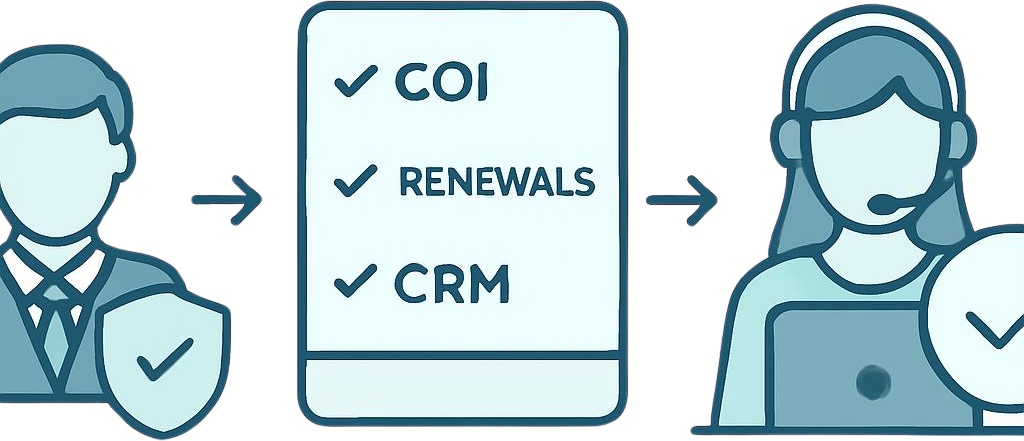
Your VA keeps client records, policy statuses, and follow-up dates current in your CRM, so your pipeline reflects what’s actually happening rather than what you remember from a call two weeks ago. Agents who also write annuities face a related but distinct documentation requirement — see our guide to annuity administration outsourcing for how that paperwork differs from life insurance replacement rules.
What a virtual assistant for life insurance agents should never handle
The boundary here is firmer than in most insurance lines, precisely because the replacement rules exist to protect clients from exactly this kind of blurred line. A VA should never recommend replacing a policy, characterize the differences between old and new coverage to a client, or have any conversation that could be construed as influencing a replacement decision. That conversation belongs entirely to you as the licensed agent — the VA’s role is preparing the documentation you use in that conversation, not participating in it.
This isn’t legal advice — replacement regulations vary by state, and if you have specific compliance questions about your obligations, we’d recommend confirming directly with your state insurance department or compliance counsel rather than relying on general guidance like this.
How Silkee supports life insurance agents specifically
Our Insurance Concierge package covers the back-office side of a life insurance practice — application tracking, underwriting follow-up, replacement paperwork preparation, and policy record maintenance. For agents whose priority is generating new business rather than back-office support, our Sales Assistant package covers lead follow-up and appointment scheduling instead.
During your consultation, we’ll map your specific workflow — which carriers you write with, how your state’s replacement rules apply, and where your time is actually going.
Book a free consultation, or see how our insurance virtual assistant cost compares to hiring in-house before you reach out.
Frequently asked questions
Can a virtual assistant help with life insurance policy replacements?
Yes, with clear boundaries. A VA can prepare the required disclosure and comparison paperwork, track timelines, and organize the documentation your state requires. What a VA cannot do is recommend the replacement, characterize the comparison to the client, or take part in the conversation that leads to the decision — that stays entirely with the licensed agent.
What is “twisting” and “churning” in life insurance, and why does it matter for a VA?
Twisting is misrepresenting a policy to convince a client to replace it; churning is using an existing policy’s cash value to fund a new one primarily for commission benefit rather than client benefit. Both are regulatory violations. A VA should never be involved in any client-facing communication that could contribute to either — their role is administrative preparation, not persuasion.
How does a VA help with underwriting delays?
Your VA tracks outstanding underwriting requirements — medical exams, attending physician statements, additional forms — and follows up with the relevant parties so applications keep moving instead of sitting stalled without anyone noticing.
Is this legal advice about replacement regulations?
No. Replacement regulations vary by state and change over time. This page describes the general structure of these rules for context, not specific legal guidance. Confirm your obligations directly with your state insurance department or compliance counsel.
How fast can a life insurance agent get started with a VA?
Most agencies are live within 5–7 business days of their first call, with no setup fee.